
























IN THIS ARTICLE
- What is a mechanical keyboard?
- How is a mechanical keyboard different from a membrane keyboard?
- Which switch should you pick: linear, tactile, or clicky?
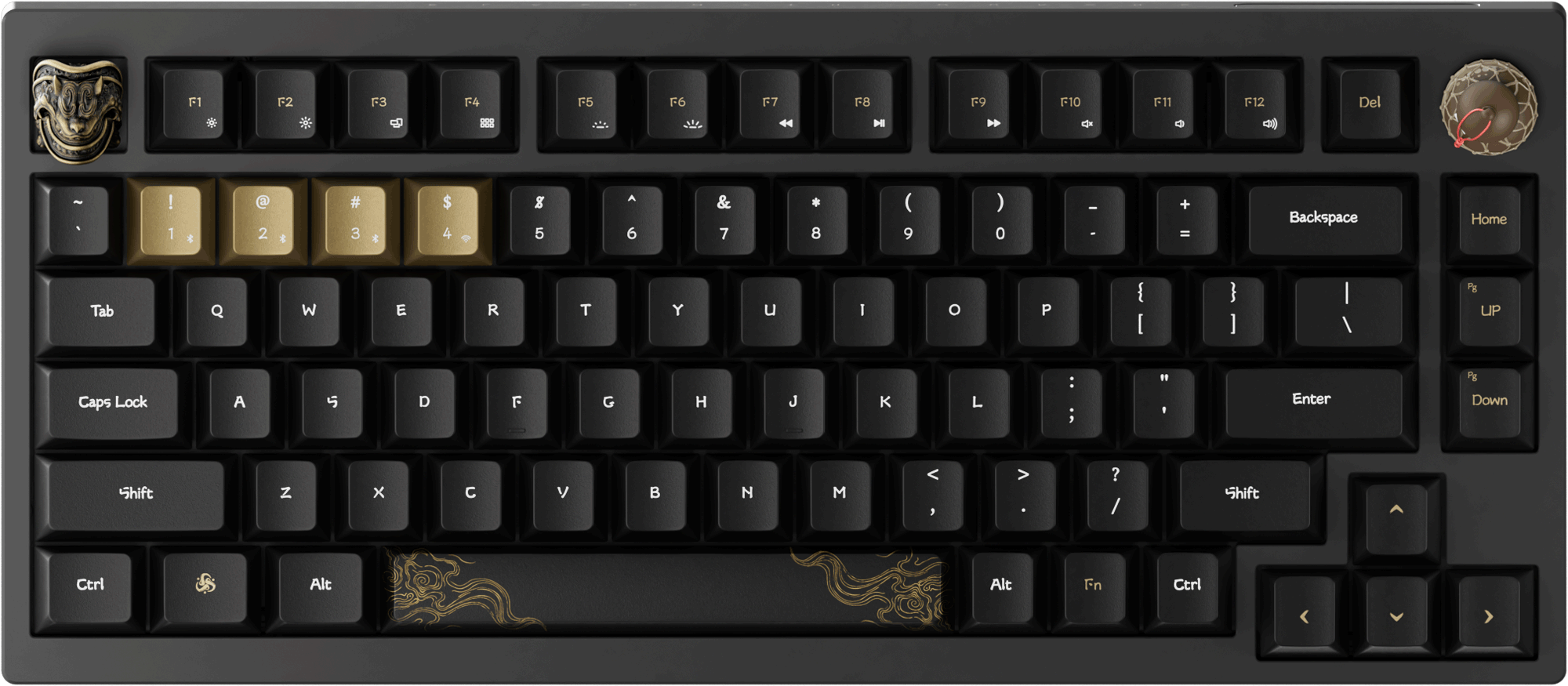
- Which keyboard size and layout do you need?
- What should you check before you buy a mechanical keyboard?
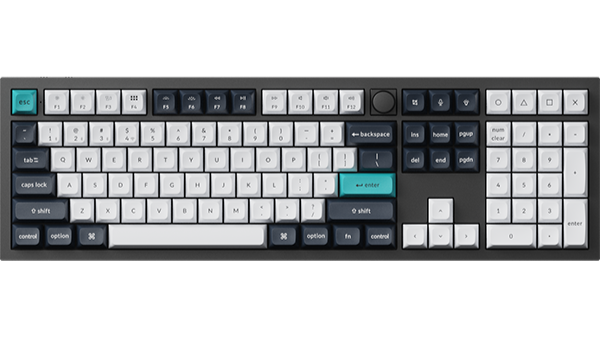
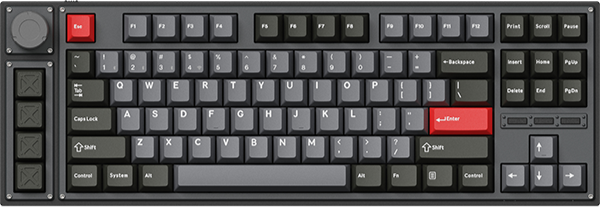
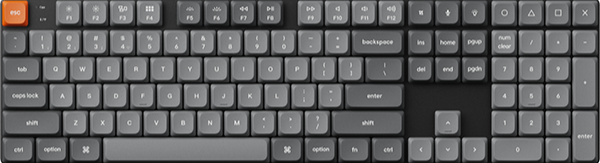
- Keychron Q6 Max: Best for a full-size layout with a number pad
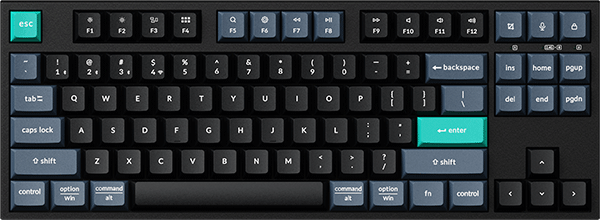
- Keychron Q3 Ultra 8K: Best for a tenkeyless layout with 8000 Hz wired and 2.4 GHz polling
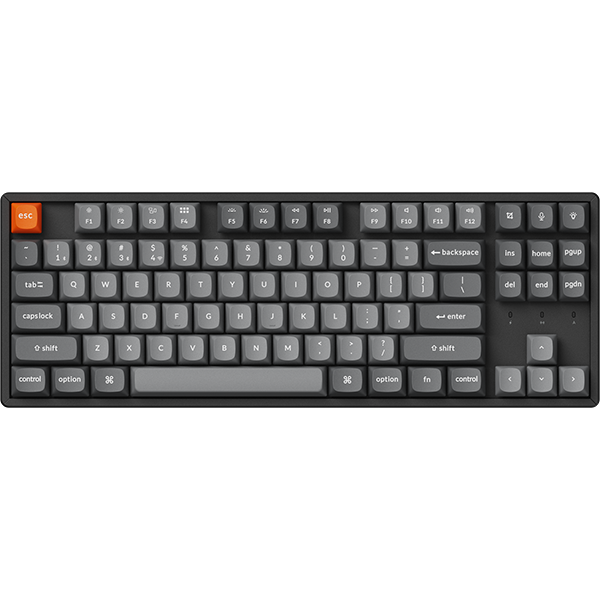
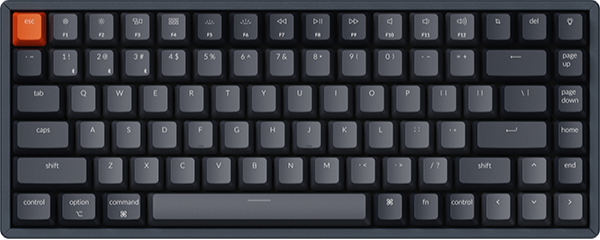
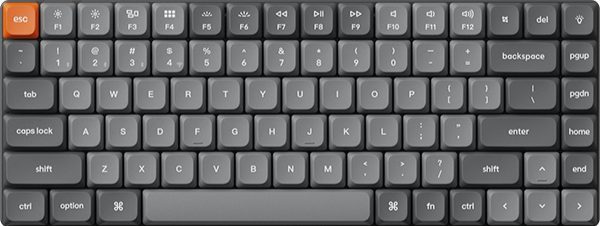
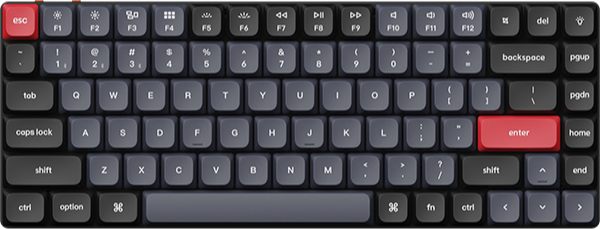
- Keychron K3 Max: Best for a low-profile 75% layout
- Frequently asked questions
A mechanical keyboard has its own switch under every key, with a spring inside and, on most switches, a pair of metal contacts. The most common keyboard design made today, the rubber dome membrane keyboard, uses one rubber sheet under all the keys instead. This page explains the difference, then helps you pick a switch type, a keyboard size, and a model.
Quick answer
- If you type numbers every day: pick the full-size Q6 Max, which keeps the number pad.
- If you want your mouse closer and play games: pick the tenkeyless Q3 Ultra 8K, with 8000 Hz over the cable or receiver.
- If you want a thin board for a small desk: pick the 75% low-profile, 525 g K3 Max.
- If you are unsure about switches: start with Brown, a tactile switch with a small bump.
What is a mechanical keyboard?
Short answer: It is a keyboard with a separate mechanical switch under each key.
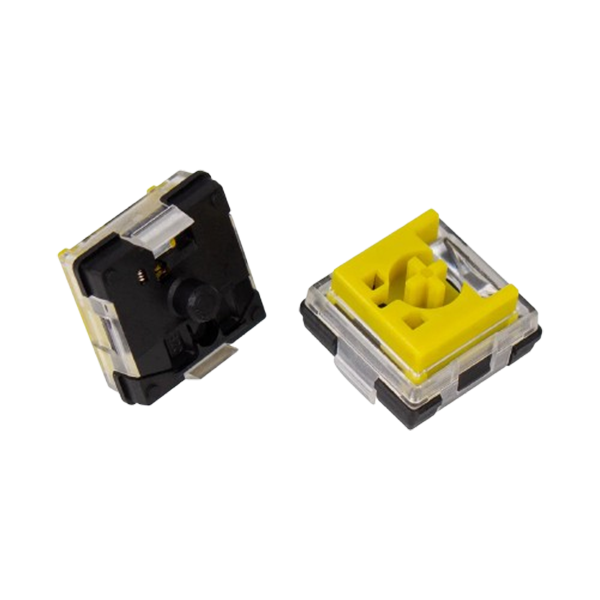
Each switch is a small module with a housing, a stem, and a spring. On a metal-contact switch, the contacts are held apart at rest. When you press the key, the stem moves down, the contacts meet, and the keyboard registers the press. When you let go, the spring pushes the key back up.

Because every key has its own switch, the switch you choose sets the feel. On a hot-swappable board, you can fit new switches later without soldering.
Check: the Switches or Switch Type option on a product page names the switch, and that name tells you the feel.
How is a mechanical keyboard different from a membrane keyboard?
Short answer: A typical membrane keyboard registers every key through one shared rubber dome sheet and a stack of plastic layers. A mechanical keyboard gives each key its own switch.
What changes for you:
- Feel: on a mechanical keyboard, you choose it by switch type. A membrane keyboard gets its feel from the rubber dome.
- Parts you can change: a mechanical keyboard lets you change keycaps, and switches too on hot-swappable boards. Membrane domes sit in one sheet.
- Sound: it depends on the switch.
Our mechanical vs membrane keyboard guide covers more.
Check: if you share a room, read the switch name before you buy.
Which switch should you pick: linear, tactile, or clicky?
Short answer: Pick linear for a smooth press, tactile to feel a small bump, and clicky to hear a click as well.
- Linear: the key goes down smoothly with no bump. Red switches are usually linear.
- Tactile: you feel a small bump partway down, so you know the press registered. Brown switches are usually tactile. On the Q6 Max, Banana gives an early tactile bump at the top.
- Clicky: a bump plus an audible click. Blue switches are usually clicky.
Many all-day typists prefer tactile, and many players prefer linear. Our keyboard switch types guide explains each family, and red switch vs brown switch compares two of them.
Check: if you want a clicky switch, the K3 Max is the one of the three picks below with a Blue option.
Which keyboard size and layout do you need?
Short answer: Start from the number pad. Keep it with 100% or 96%, drop it with 80% or 75%, and choose 65% or 60% only if you are happy to reach some keys through a layer.
A keyboard layout is the arrangement of keys on the board. Sizes are named as a percentage of a full-size keyboard, which typically has 104 keys in the US. The letter order, such as QWERTY, is a separate topic in our QWERTY keyboard layout guide.
| Keyboard size | Also called | Keys | What it drops | Our pick |
|---|---|---|---|---|
| 100% | Full-size | 104 (US) | Nothing | Q6 Max |
| 96% | Compact full-size | About 100 | A few navigation keys | — |
| 80% | Tenkeyless (TKL) | 87 (US) | The number pad | Q3 Ultra 8K |
| 75% | Compact tenkeyless | 84 on the K3 Max | Number pad and some navigation keys | K3 Max |
| 65% | Compact | About 67 to 68 | Number pad, F-key row, and some navigation keys | — |
| 60% | Mini | About 61 | Number pad, F-key row, arrows, and navigation keys | — |
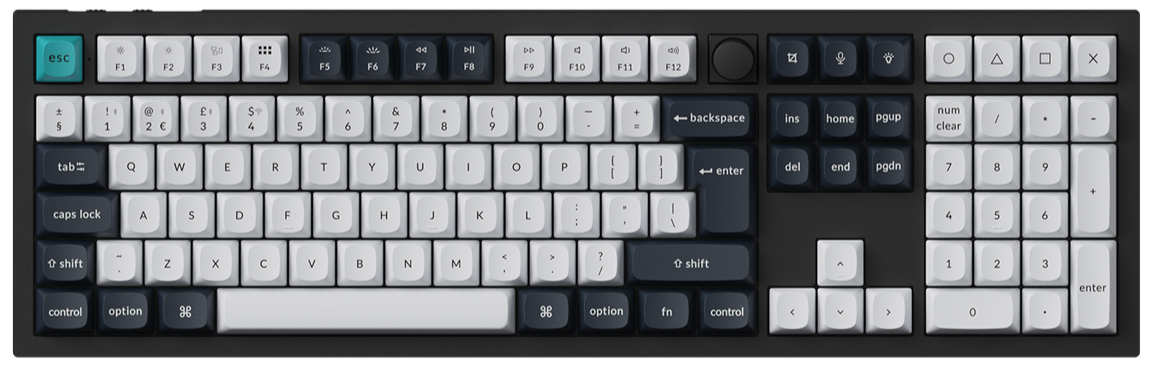
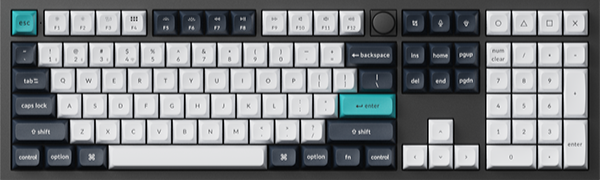
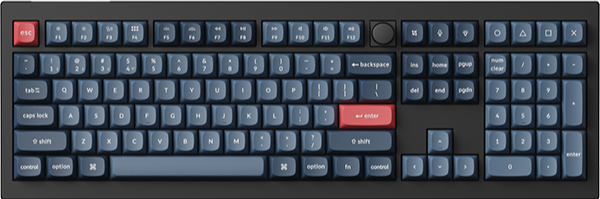
100% full-size keeps every key, the number pad included, in its usual place.
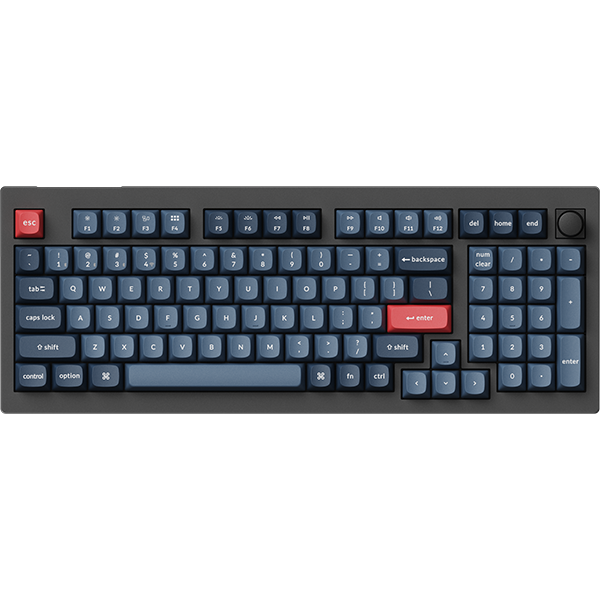
96% keeps the number pad and the F-key row, keeps almost every key in a narrower board, and drops a few keys such as Print Screen, Scroll Lock, and Pause.
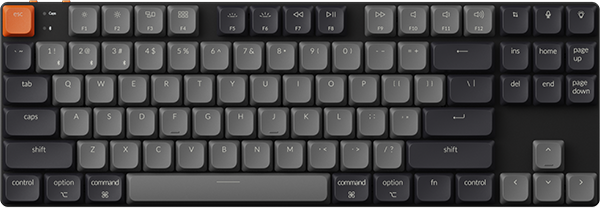
80%, or tenkeyless, removes the number pad and nothing else. The navigation keys and arrows stay in their usual block.
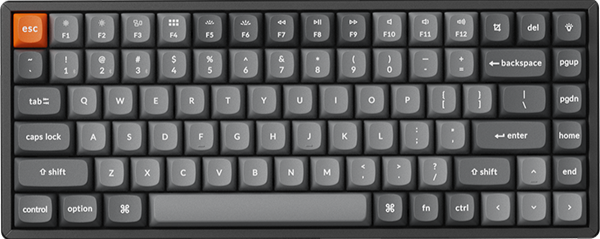
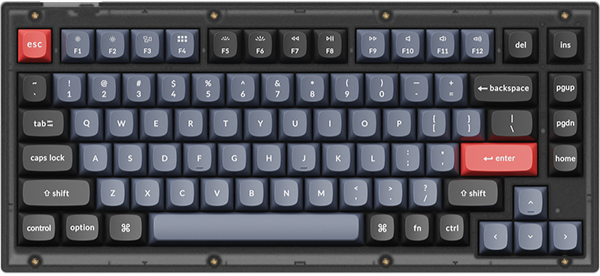
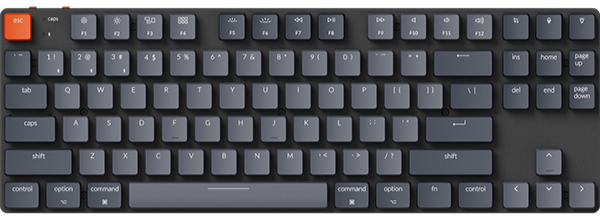
75% also drops the number pad, tucks the arrows into the bottom right corner, and stacks one column of navigation keys on the right edge. The F-key row stays.
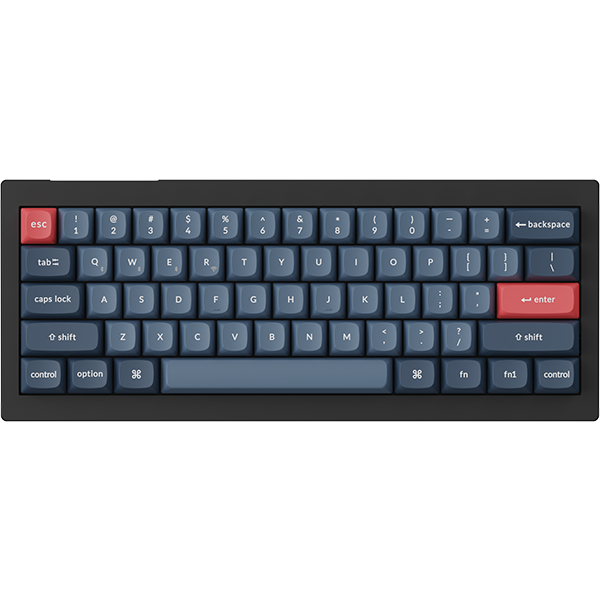
65% drops the F-key row as well and keeps a short column of navigation keys, which differs by board. 60% keeps only the main typing block. Both put the missing keys on a layer: you hold a function key and press another key. On our 60% Q4, F1 to F12 sit on fn1 plus the number row.
Check: measure the free width where the keyboard will sit, leaving your mouse in its usual spot. You need about 45 cm for the Q6 Max (446 mm), 37 cm for the Q3 Ultra 8K (365 mm), and 31 cm for the K3 Max (306 mm).
What else should you check before buying a mechanical keyboard?
Short answer: Check hot-swap, keycaps, connection, and how you remap keys.
- Hot-swap: the Q6 Max and Q3 Ultra 8K take almost all 3-pin and 5-pin MX-style mechanical switches. The K3 Max takes Gateron and Keychron low-profile mechanical switches on the versions marked (Hot-swappable).
- Keycaps: all three picks use double-shot PBT keycaps. On the Q6 Max, they resist oil and keep the legends from fading. Our ABS vs PBT keycaps guide explains the materials.
- Connection: all three connect over a 2.4 GHz receiver, Bluetooth to up to three devices, or a cable. The polling rate is how many times a second the keyboard reports to the computer. In the Q3 Ultra 8K's name, 8K means 8000 Hz.
- Remapping: you change what a key does in Keychron Launcher, a web app you open in the latest Chrome, Opera, or Edge with the keyboard connected by cable. Our guide to remapping a key in Launcher shows the steps.

Check: a hot-swappable version lets you change the switches later instead of the keyboard.
Keychron Q6 Max: Best for a full-size layout with a number pad
View the Q6 Max on keychron.com →
Short answer: Pick the Q6 Max if you type numbers every day and want every key in its usual place.
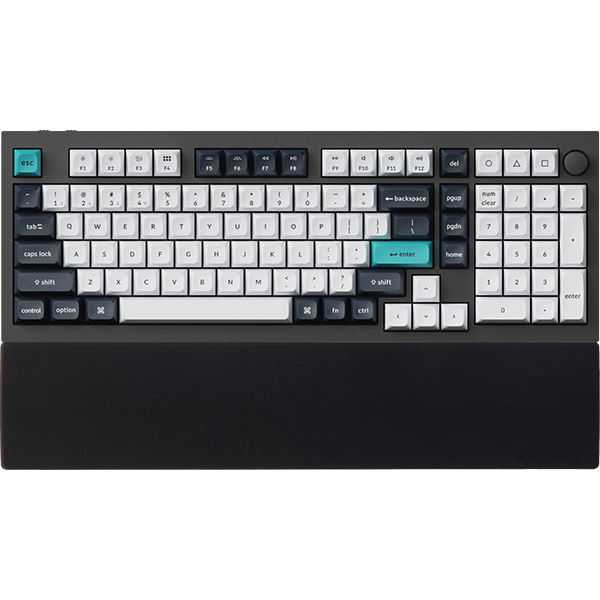
The Q6 Max is a 100% full-size board with a knob, a full number pad, and a separate block for Insert, Home, Page Up, Delete, End, and Page Down. It is 446 mm wide and weighs 2184 g ± 10 g as the Fully Assembled version. The body is CNC-machined aluminum, and the double-gasket design reduces acoustic resonance between the top and bottom cases.

It reports at 1000 Hz over the 2.4 GHz receiver or cable, and 90 Hz over Bluetooth. The battery lasts up to 180 hours with the backlight off.
Pick: Fully Assembled Knob in Carbon Black or Shell White, with Gateron Jupiter Red or Gateron Jupiter Brown. For legends printed on the side of each key, choose Fully Assembled Knob (Side-Printed Keycaps) in Shell White.
Keychron Q3 Ultra 8K: Best for a tenkeyless layout with 8000 Hz wired and 2.4 GHz polling
View the Q3 Ultra 8K on keychron.com →
Short answer: Pick the Q3 Ultra 8K if you want your mouse closer and play games over the cable or receiver.
The Q3 Ultra 8K is an 80% tenkeyless board, 365 mm wide. It drops the number pad and keeps the F-key row, the arrows, and a block for Insert, Home, Page Up, Delete, End, and Page Down. It weighs 1787 g ± 10 g and has a full aluminum body with a gasket mount.

Over the cable and the 2.4 GHz receiver, it reports at 8000 Hz, and over Bluetooth at 125 Hz. A higher polling rate changes how often the keyboard reports, not how far you press a key.
Pick: Fully Assembled Knob in Black or White, with Keychron Silk POM Switch - Red, Keychron Silk POM Switch - Brown, or Keychron Silk POM Switch - Banana.
Keychron K3 Max: Best for a low-profile 75% layout
View the K3 Max on keychron.com →
Short answer: The K3 Max suits you if you want a thin, low-profile board and rarely use the number pad.
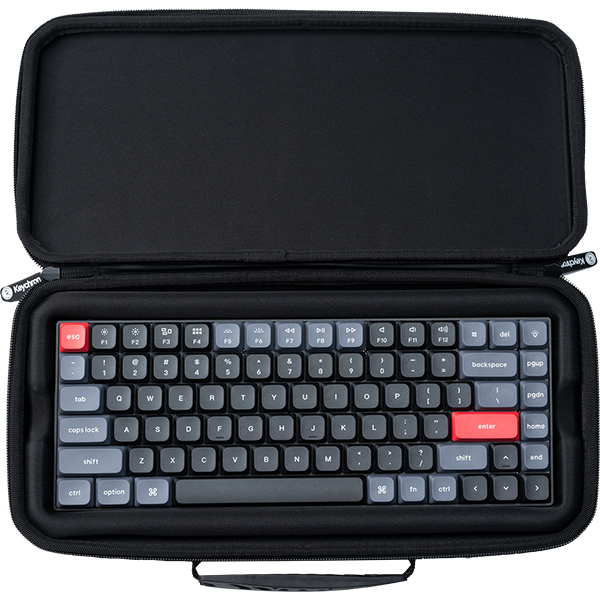
The K3 Max is a 75% board with 84 keys, 306 mm wide, and 525 g. Its low-profile Gateron switch is 31% slimmer than a normal-profile switch. It takes only low-profile switches, so the MX style switches that fit the Q6 Max and Q3 Ultra 8K do not fit here.

It reports at 1000 Hz over the 2.4 GHz receiver or cable. Switch options are Low Profile Gateron Mechanical Red, Blue, Brown, or Banana, or Low Profile Keychron Mechanical Red, depending on color and backlight.
Pick: Black with RGB Backlight (Hot-swappable) and Low Profile Gateron Mechanical Red or Brown, if you want to change switches later. For a clicky board, choose Black with RGB Backlight and Low Profile Gateron Mechanical Blue. That version is not hot-swappable.
Frequently asked questions
Are mechanical keyboards loud?
It depends on the switch. Clicky switches add an audible click on every press. Linear and tactile switches have no click, so many people pick one of those for a shared room.
Are mechanical keyboards good for gaming?
Many players prefer linear switches for a smooth press. For games, use the cable or the 2.4 GHz receiver: the Q3 Ultra 8K reports at 8000 Hz there, and the Q6 Max and K3 Max at 1000 Hz. More in our mechanical keyboards for gaming guide.
Can I use a mechanical keyboard with a Mac?
Yes. All three picks include keycaps for macOS and Windows. The Q6 Max and Q3 Ultra 8K have a system toggle that saves one layout for each system, and the K3 Max lets you set different keymaps for Mac and Windows.
Shop the gear


References & Citations
- Mechanical switches are discrete modules with a housing, spring, and slider whose metal contacts close when pressed; membrane keyboards use three layers under a rubber dome sheet. (Wikipedia, Keyboard technology)
- Full-size keyboards are commonly 104 or 105 keys; tenkeyless drops the number pad, 75% drops lesser used navigation keys, 60% drops the function row and navigation keys; smaller boards use layers. (Wikipedia, Keyboard layout)
- A tenkeyless version of the 104-key ANSI layout has 87 keys. (Wikipedia, Model M keyboard)
- A standard 65% keyboard typically has 67 to 68 keys and uses layers for the function keys. (Keychron, 65% vs 75% keyboard)
- Q6 Max: 100% layout, 446 mm wide, 2184 g ± 10 g, 1000 Hz over 2.4 GHz and wired, hot-swap with almost all 3-pin and 5-pin MX style switches, double-gasket design. (Keychron Q6 Max product page)
- Q3 Ultra 8K: 80% layout, 365 mm wide, 1787 g ± 10 g, 8000 Hz over wired and 2.4 GHz, Keychron Silk POM switches. (Keychron Q3 Ultra 8K product page)
- K3 Max: 75% layout with 84 keys, 306 mm wide, 525 g, low-profile Gateron switch 31% slimmer than normal profile. (Keychron K3 Max product page)