

























Yes. In general, running a wireless mouse at 8K (8000 Hz) uses more power than running it at a lower polling rate.
An 8K polling rate allows a mouse to report data to your PC more frequently, which can improve responsiveness in situations where fast, consistent input matters. But making the mouse communicate more often also requires more power.
This isn't a flaw. It is simply a tradeoff between performance and battery life.
What Is Mouse Polling Rate?
Polling rate describes how often a mouse can report data to your computer.
The relationship is straightforward:

In simple terms, 8K means the mouse is communicating with your PC much more frequently than it does at 1K. That additional work requires more power.
Why Does 8K Polling Use More Battery?
There is no single component responsible for the difference. Several parts of a wireless mouse have to work more frequently as the polling rate increases.
1. More Frequent Data Transmission
At 1K (1000Hz), a mouse can report data up to 1,000 times per second.
At 8K (8000Hz), that rises to as many as 8,000 reports per second.
More frequent reports mean the mouse has to prepare and send data more often, increasing overall power consumption.
2. More Wireless Radio Activity
On a wireless mouse, those reports also have to travel between the mouse and its receiver. Increasing the polling rate requires the wireless system to communicate more frequently, which generally means more radio activity and higher power consumption.
3. More Processing Work
The mouse's MCU handles tasks such as processing sensor data, button inputs, and communication with the computer.
At higher polling rates, it has to process and manage more reports within the same amount of time. Modern gaming mouse hardware is designed to do this efficiently, but processing more data still requires energy.
This is why battery design becomes increasingly important as wireless mice move from 1K to 2K, 4K, and 8K polling rates.
How Much Does Polling Rate Affect Battery Life? 1K vs 2K vs 4K vs 8K
There is no universal answer.
Battery life depends on the mouse's hardware, battery capacity, wireless implementation, firmware, settings, and how the mouse is used. But looking at the same mouse under controlled conditions makes the relationship much easier to see.
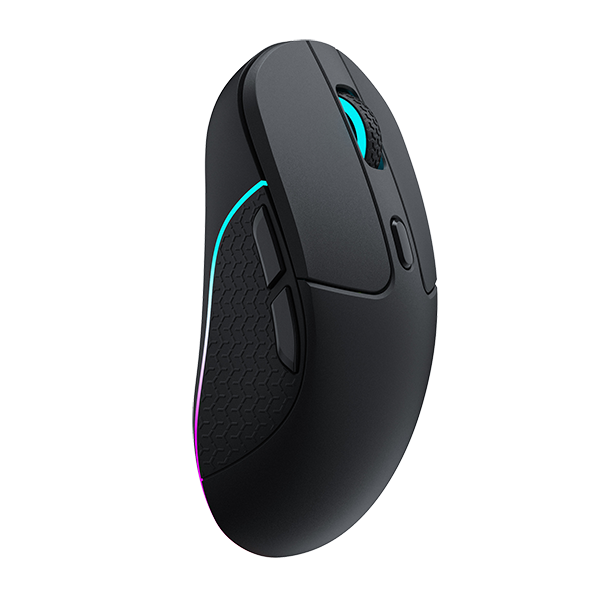
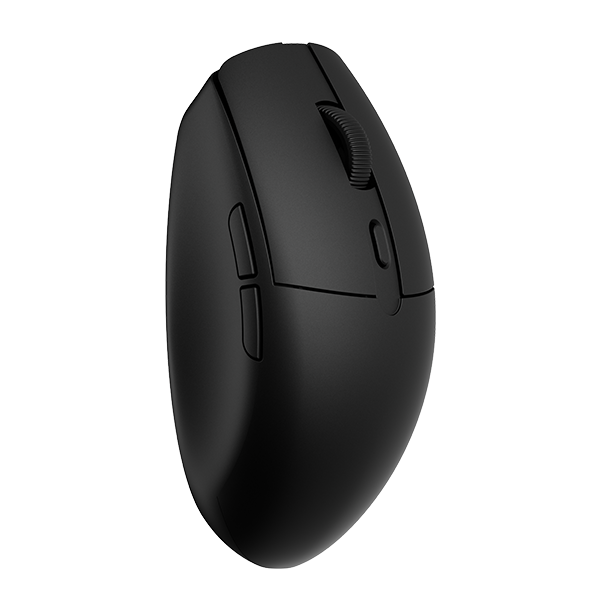
Take the Keychron G6 HE as an example:

The pattern is clear.
At 8K, the estimated battery life is 29 hours. Dropping to 4K increases it to 60 hours, while 2K reaches 103 hours and 1K reaches 171 hours. 8K polling causes real battery drain: roughly 6x shorter runtime than 1K on the same mouse. For context, current high-end 8K wireless mice commonly list around 95–196 hours of battery life at 1K and 17–61 hours at 8K, based on published manufacturer specifications.
*Battery capacity, hardware, firmware, and test conditions vary by manufacturer, so these figures are for general market context rather than direct comparison.
How to Make an 8K Wireless Gaming Mouse Last Longer
Higher polling rates naturally require more power, but there are still practical ways to get more runtime from a wireless mouse.
1. Lower the Polling Rate When You Don't Need 8K
This is one of the most direct ways to reduce power consumption.
Higher polling rates are most relevant when responsiveness is a priority, particularly in fast-paced games and setups capable of taking advantage of more frequent input updates.
For browsing, documents, email, or general desktop use, running the mouse at its maximum polling rate may provide much less practical benefit. Consider using a lower polling rate and switching back to 8K when maximum responsiveness matters.
2. Reduce Unnecessary Power Use When the Mouse Is Idle
When a wireless mouse is not actively being used, allowing it to enter its low-power sleep state helps reduce unnecessary battery consumption.
If you are not going to use the mouse for a long period, turning it off can reduce standby power use further.
This will not change how much power 8K polling requires while you are actively using the mouse, but it can help avoid wasting battery during long periods of inactivity.
3. Choose a Battery Setup That Fits How You Use Your Mouse
Battery life is not only about how many hours a mouse lasts on a single charge. It is also worth considering what happens when the battery eventually runs low.
This becomes more relevant if you prefer using higher polling rates regularly. A mouse with a swappable battery can be a practical choice.
The Keychron G6 HE UltraLight Mouse, for example, offers a swappable battery option. When the battery is depleted, just replace it in about three seconds with another fresh battery, while a spare battery can charge through the Turbo-Link 8K receiver and charging dock.
Watch the 3-Second Swap 👇
This does not reduce the power required by 8K polling itself. Instead, it gives users another way to manage battery downtime when they prefer to use higher polling rates more often.
Performance and Battery Life Are a Balance
In summary, 8K polling does not need to be the right setting for every task.
When maximum responsiveness matters, a higher polling rate gives the mouse more opportunities to report updated data. When it does not, lowering the polling rate can significantly extend battery life.
Good battery design also makes sense. Although it cannot remove this tradeoff, it can make it easier to manage by giving users more flexibility in how they balance performance and runtime.
FAQ
Do you need to use 8K all the time?
Not necessarily. It depends on your setup, the games you play, and what you prioritize.
Higher polling rates reduce the time between mouse reports, which can provide more up-to-date input. The benefit is more relevant in fast-paced games, particularly when paired with high frame rates and high-refresh-rate monitors.
For browsing, documents, email, or general desktop use, a lower polling rate may already provide all the responsiveness you need while using less power.
Why do different 8K mice have such very different battery life?
Because polling rate is only one factor. Battery capacity, MCU efficiency, sensor power consumption, firmware, wireless implementation, and power-management strategy can all affect runtime.
Can an 8K mouse run at a lower polling rate?
Yes, many current 8K gaming mice can. The 8K specification generally refers to the mouse's maximum supported polling rate rather than a rate it must use all the time.
On Keychron 8K mice with a Report Rate button on the bottom, press the button to switch between the available polling-rate levels.
Is 8K polling rate worth the battery drain?
It depends on how you use your mouse. If you play fast-paced games and prioritize the highest possible reporting frequency, 8K may be worth the extra power use. For everyday work or casual gaming, a lower polling rate can offer a better balance between responsiveness and battery life.
Want to learn more about the G6 HE? See the full product details and join the launch list for updates.