




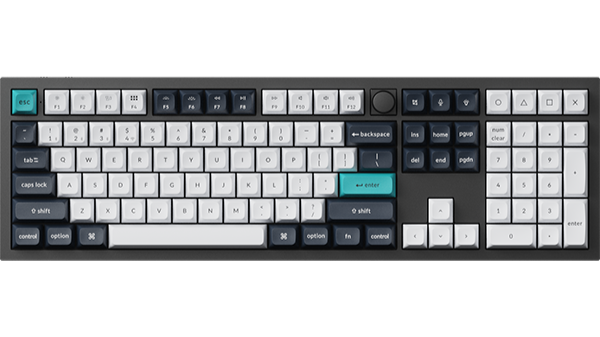
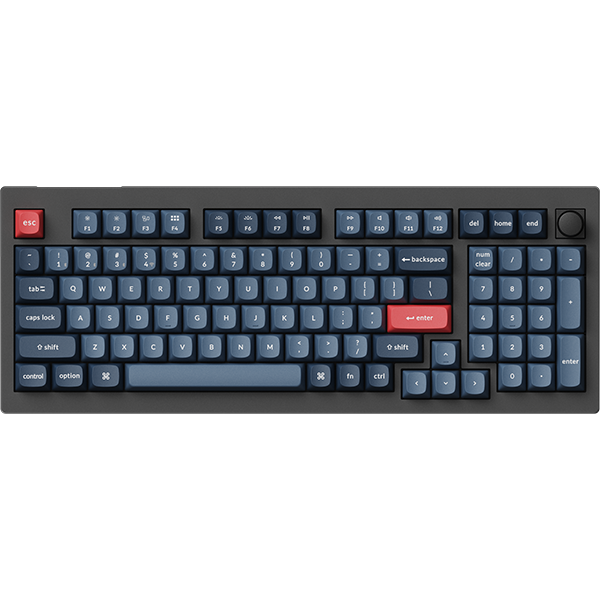
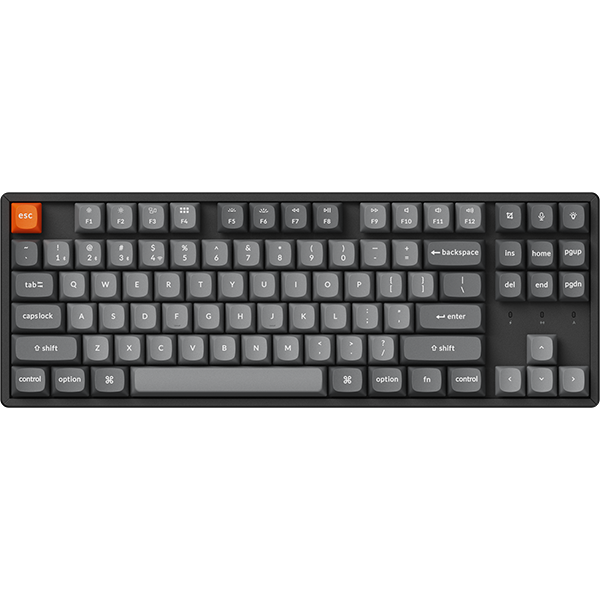

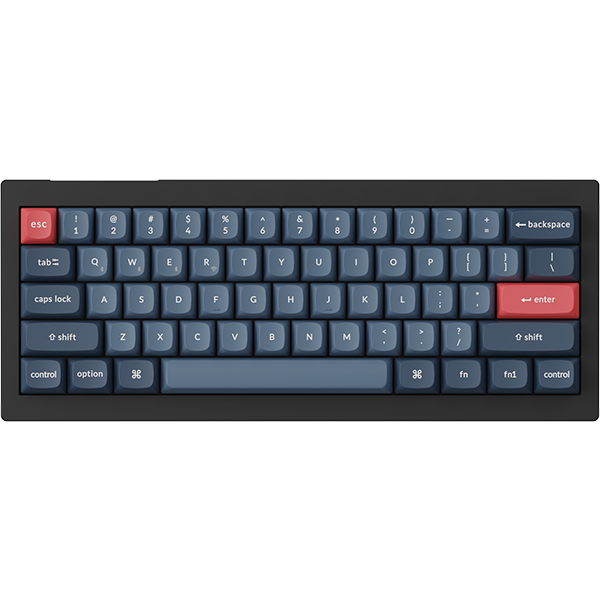


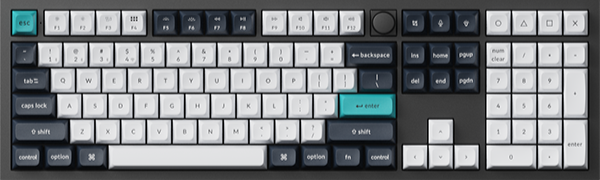
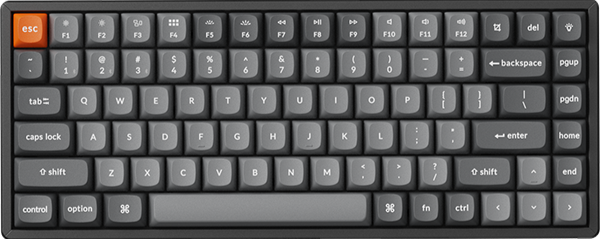
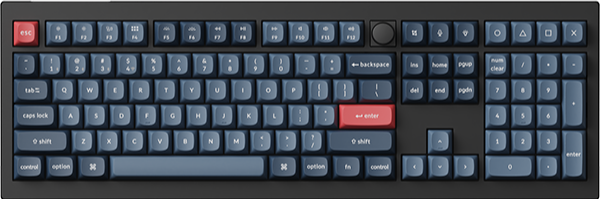
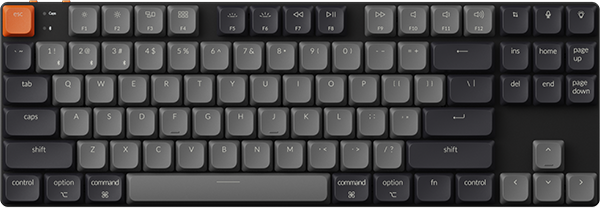
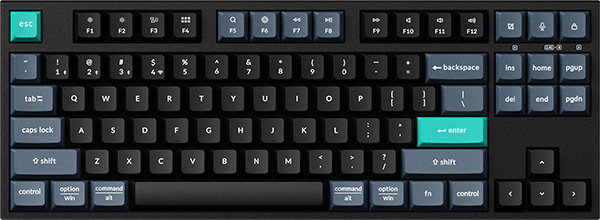
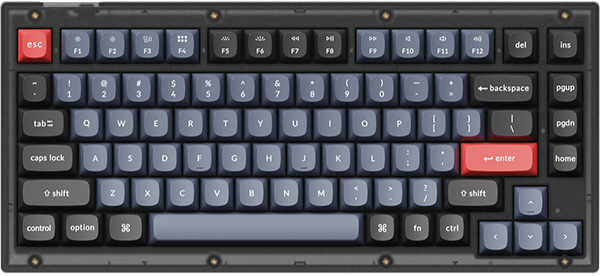
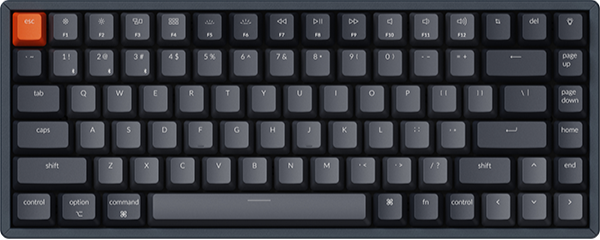
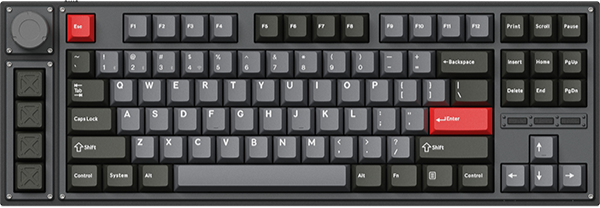




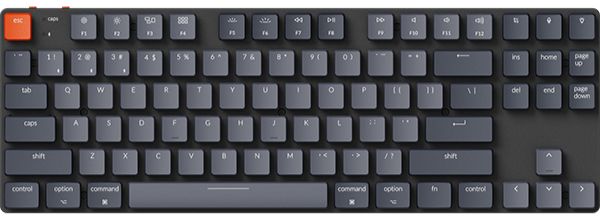


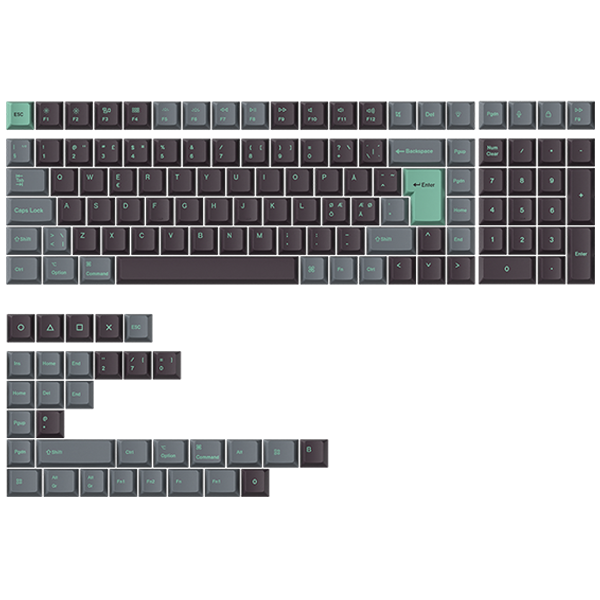










If a K10 HE or a K2 HE is sitting in your cart and you are not a competitive gamer, you have probably searched some version of the same question: is this good for typing, or am I paying for a gaming feature I will never use? Short answer: it is worth it if you are willing to open one web app once and set the actuation point, and you are fine with a smooth switch that has no bump. If either of those is a no, keep reading, because a regular mechanical keyboard may suit you better.
What a magnetic switch does differently
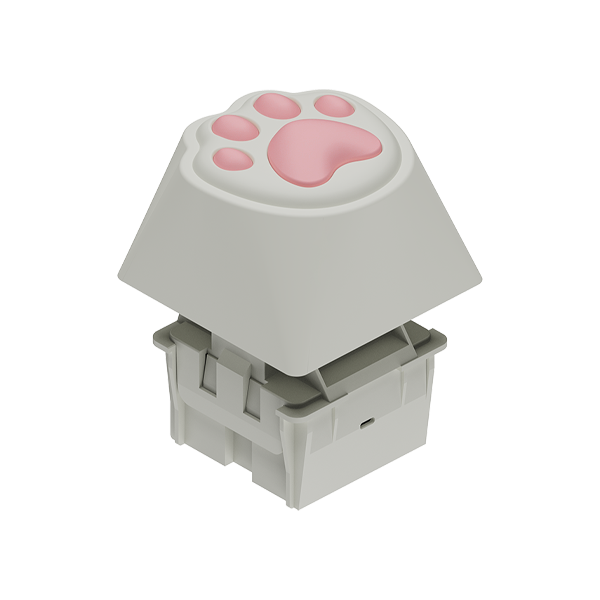
A standard mechanical switch registers a press when a metal contact inside it closes. A magnetic switch, also called Hall effect or HE, has no metal contact. A magnet moves past a sensor as you press, and the sensor reads how far down the key is. Because the board knows the position of the key rather than only pressed or not pressed, it can be told how far a key has to travel before it counts. That is what "adjustable actuation" means: the actuation point is the depth at which a press registers, and on an HE board you choose it.
Two things follow. With no contact to close, they do not suffer the contact bounce or contact wear that mechanical switches can develop over years of use. And magnetic switches are linear only: smooth all the way down, with no tactile bump and no click. If you have never liked linear switches, that matters more than anything about the magnet.
Adjustable actuation, for typing first
On the K10 HE the actuation point can be set anywhere from 0.2 mm to 3.8 mm on the Gateron Double-Rail version, or 0.2 mm to 3.3 mm on the Keychron Ultra-fast Lime version. The K2 HE lists adjustable actuation points too; its page does not give the millimetre range, so we will not guess it here.
Set it shallow and the key registers almost as soon as you touch it, so each keystroke needs less travel. Set it deep and you have to press further before anything registers, which reduces accidental keystrokes. As a starting point, not a spec: try around 1 mm for everyday typing, go lower if you want speed, and go past 2 mm if you keep hitting keys by accident. A programmer who presses every key all the way down anyway can set actuation deep on purpose and get fewer typos without any extra effort.
Rapid Trigger is the gaming half of the same sensor. In plain words: the actuation point resets as soon as a key starts rising, so repeat presses register from any position. If you play something competitive in the evening after typing all day, that is the feature working for you. If you do not, you never turn it on and it costs you nothing.
On the K10 HE, actuation and Rapid Trigger are set through Keychron's Launcher web app, which runs in a browser. The K HE family as a whole uses Launcher for trigger points, Rapid Trigger and key remapping. So the honest framing is this: the typing benefit of an HE board comes from adjusting the actuation point, and you do that in Launcher. If you know you will never open it, a regular mechanical keyboard is the better buy.
The trade-offs for a typist
Linear only. There is no tactile or clicky magnetic switch for these boards. If you love a Cherry Brown bump or a real click, HE will feel flatter to you.
Bluetooth polls at only 125 Hz on these boards. Polling rate is how many times per second the keyboard reports to the computer. Both boards report 1000 times a second over the 2.4 GHz dongle or the USB-C cable, but only 125 times a second over Bluetooth. For plain typing, 125 Hz is not something most people notice. If you also game on it, use the dongle or the cable.
One more real-world note. One reviewer of the K2 HE mentioned that over 2.4 GHz the board occasionally missed the first keystroke after it had been idle for a while. That is one person's experience rather than a confirmed pattern, but it is worth knowing before you assume wireless HE is flawless.
The compatibility trap: check which version is in your cart
This is where people get burned. Buyers in the r/Keychron thread Should I get the K10HE? were confused about which K10 HE switch version fits which board. Both boards come in versions that take different replacement switches. On the K10 HE the version names are the switch names; on the K2 HE they are Version 1 and Version 2.
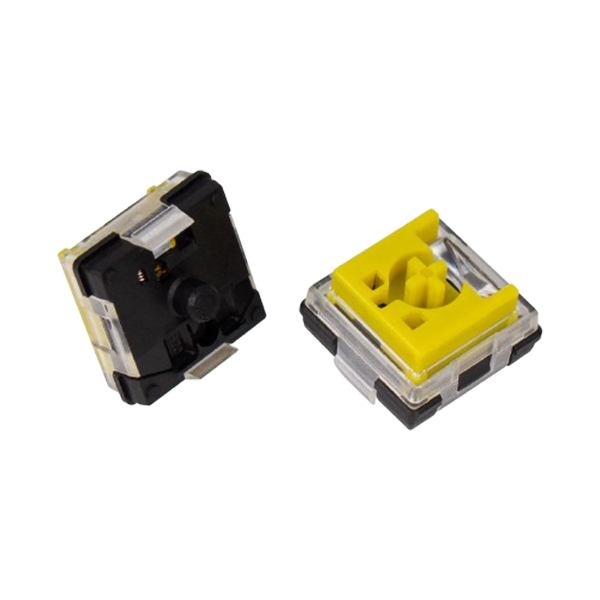
The K10 HE ships either as a Gateron Double-Rail version, which accepts only Gateron Double-Rail Magnetic Nebula switches, or as a Keychron Ultra-fast Lime version, which accepts only Keychron Ultra-fast Lime switches. Other magnetic switches, including Gateron Magnetic Jade or KS-20, do not work in either.
The K2 HE ships with Gateron Double-Rail Magnetic Nebula switches in two versions: Version 1 accepts only Gateron Double-Rail switches, and Version 2 also accepts Keychron Ultra-fast Lime. The version is written in the variant name you pick on the product page, so it is also in your cart line. If you plan to buy replacement or upgrade switches later, read that variant name before you check out, not after the switches arrive and do not fit. If you never plan to swap switches, the version does not change how the board types; pick by price and availability.

K2 HE vs K10 HE
| K2 HE | K10 HE | |
|---|---|---|
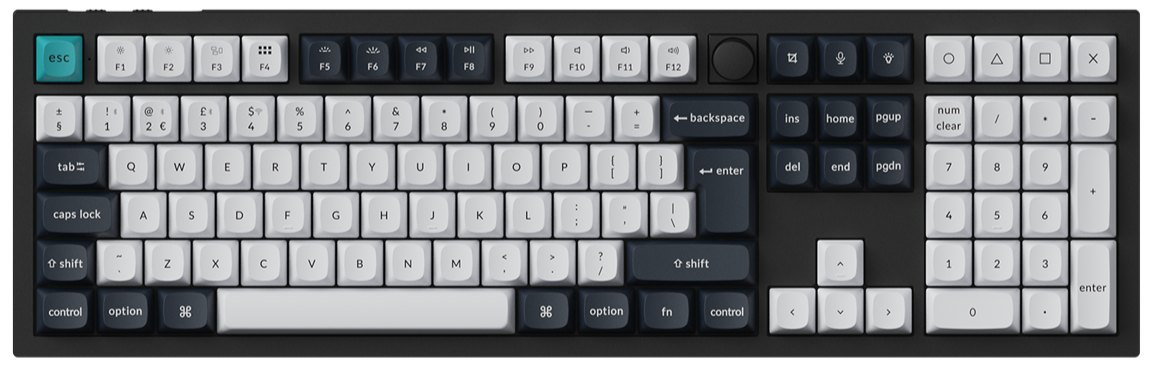
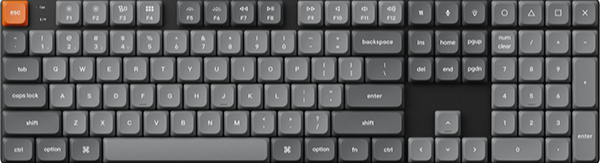
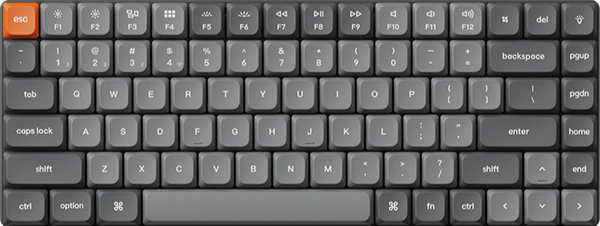
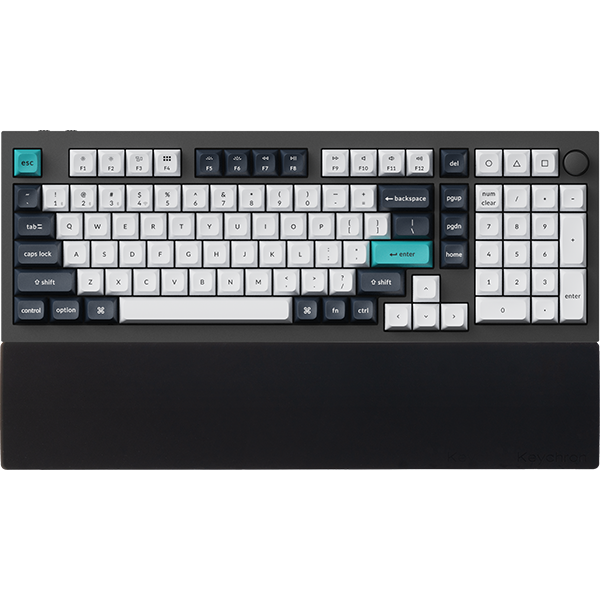
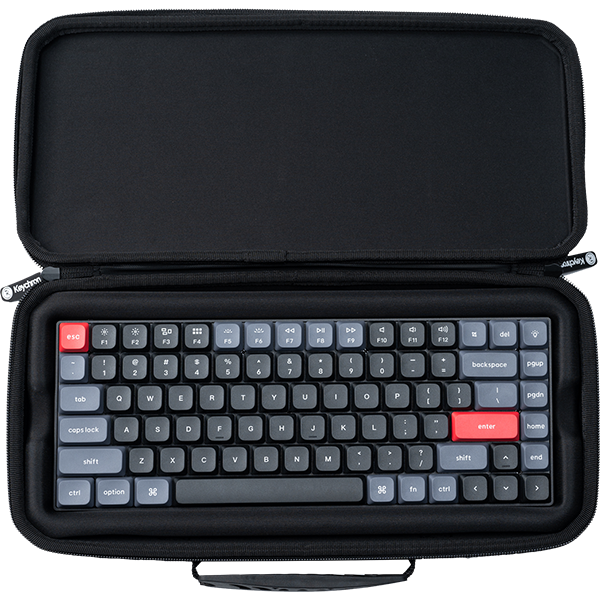
| Layout | 75%, no number pad | Full size, number pad included |
| Price (US, at the time of writing) | $129.99 Standard to $139.99 Special Edition and ISO | $134.99 Standard to $144.99 Special Edition |
| Battery | 4000 mAh, up to 110 hours wireless | 4000 mAh, up to 120 hours wireless |
| Polling | 1000 Hz wired and 2.4 GHz, 125 Hz Bluetooth | 1000 Hz wired and 2.4 GHz, 125 Hz Bluetooth |
| Switch versions | Double-Rail Nebula, Version 1 or Version 2 | Double-Rail Nebula, or Ultra-fast Lime |
The Standard K2 HE has an aluminum frame. The Special Edition K2 HE adds wood accents on the case, light wood on the white colorway and dark wood on black. Keychron describes it as aluminum plus wood, so do not expect the feel of an all-aluminum board. If you want a wood body, there is a separate All-Wood Special Edition K2 HE with a solid walnut frame and a CNC aluminum side panel, which is a different SKU. Battery figures are Keychron's stated maximums.

Which one should you get
All-day typist who games a little in the evening: K10 HE if you want the number pad, K2 HE if you do not. Set actuation shallow, turn on Rapid Trigger when you launch your game, and forget about it the rest of the time.
Programmer who wants fewer typos rather than faster typing: either board, with the actuation point set deep. This is the profile that gets the most out of adjustable actuation and will probably never touch Rapid Trigger.
Someone coming from Brown or clicky switches: you lose the bump. That is the part people miss most, so try one first if you can.
Someone who will never open a configuration app: skip HE. You would be paying for a feature you are not using. The regular mechanical K2 (Version 2) lists at $49.99 to $69.99, about half the K2 HE price or less, in a similarly compact layout.
Competitive gamer: neither of these is the top pick. They poll at 1000 Hz. Keychron's Q HE 8K boards are wired magnetic boards built for 8K polling, which is what competitive play rewards.
FAQ
How do I know which switch version is in my cart? The variant name on the product page, and in your cart line, says either Gateron Double-Rail or Keychron Ultra-fast Lime, and for the K2 HE it says Version 1 or Version 2. That name tells you which replacement switches will fit.
Does the K2 HE have the same actuation range as the K10 HE? Its product page lists adjustable actuation points but does not state the range, so we cannot confirm it is the same. The K10 HE range is 0.2 to 3.8 mm on the Double-Rail version and 0.2 to 3.3 mm on the Lime version.

